Showing posts with label moon face. Show all posts

Wednesday, November 30, 2011

DH investigating suspected case of Cushing's syndrome with history of taking medicines prescribed by Chan Kwok-wing

Hong Kong (HKSAR) - The Department of Health (DH) is today (November 30) investigating a suspected case of Cushing's syndrome involving an eight-year-old girl who patronised Mr Chan Kwok-wing of PCRC Chinese Medicine Clinic in Mongkok for management of allergic conditions.

The case was reported to the DH by the Hospital Authority. The girl, who had history of eczema and allergic rhinitis, consulted Chan for around two months since mid-September 2011 and was supplied with some pills, including pills in orange and black colour respectively, and green capsules and green tablets.

"The girl has stopped taking the pills after noting DH's announcement on November 28 of a previous incident related to Chan involving a seven-year-old patient who developed features compatible with steroid overdose after taking pills supplied by Chan," a spokesman said. However, her mother started to notice that the girl had some features of obesity and moon face.

The girl was admitted to the Prince of Wales Hospital today where the girl was found to have moon face, truncal obesity and recent weight gain.

Her clinical diagnosis was iatrogenic Cushing's syndrome. Cushing's syndrome can be caused by steroid overdose. The patient is now in stable condition.

The spokesman added, "Investigation of the present case, including testing of the pills for adulteration of western medicines, is in progress,"

The spokesman again appealed to members of the public, who patronised Chan for management of allergy and was supplied with a type of green and another type of orange oral tablets, to consult healthcare professionals for advice as soon as possible.

"Chan is suspected of practising Chinese medicines without licence as there is no record to show that he is either a registered medical practitioner or a pharmacist.

DH is assisting with Police investigation," the spokesman said.

Source: HKSAR Government

Friday, June 17, 2011

More about Zebrafish

The original article, Targeting zebrafish and murine pituitary corticotroph tumors with a cyclin-dependent kinase (CDK) inhibitor

Zebrafish
Zebrafish And Cushing Disease - New Model Taps Tiny, Common Tropical Fish For Large-Scale Drug Screening To Combat Cushing Disease

A common, tiny tropical fish plays a key role in a new model for Cushing disease, giving researchers a powerful tool to conduct extensive searches for effective treatments for this serious hormonal disorder, testing up to 300 drugs weekly.

The model - published online on May 2 by the Proceedings of the National Academy of Sciences -- was created in the laboratory of Shlomo Melmed, MD, dean of the medical faculty at Cedars-Sinai, by his research team led by Ning-Ai Liu, MD, PhD.

They introduced into striped zebrafish - the freshwater translucent tropical Danio rario -- the "pituitary tumor transforming gene" discovered in Melmed's lab in 1997. This caused the zebrafish to develop features of Cushing disease including: high levels of the stress-related hormone cortisol; diabetes; and heart disease. These zebrafish then were bred with fish that bear green fluorescent markers, allowing researchers to visualize in the resulting hybrids how drugs interact with the Cushing's disease pituitary tumors.

"This new model for Cushing disease means that we can more rapidly and effectively identify drugs that could be successful in fighting these tumors," Melmed said. "With no current drug therapies and limited options available to Cushing patients, it is our hope that our research will enable medical advances that will revolutionize how this disease is treated."

Cushing Disease often is caused by a pituitary tumor that triggers overproduction of a hormone, which, in turn, stimulates the adrenal gland to overproduce cortisol, affecting nearly every area of the body including the regulation of blood pressure and metabolism. This leads to serious health problems, including diabetes, hypertension, osteoporosis, obesity (especially with a distinctive moon face and fatty tissue deposits in the midsection, upper back and between the shoulders) and cardiovascular disease.

There are no approved drugs that effectively target the pituitary tumors that frequently cause the disease. "Because the tumors can be too small to be detected by MRI and a complete tumor resection by surgery can be difficult in some cases, this leaves few treatment options for many with the disease," said Dr. Liu, an endocrinologist at Cedars Sinai.

In the initial test of the zebrafish model, researchers studied five drugs, including R-roscovitine, a drug in phase two trials to treat esophageal and non-small cell lung cancer. This drug was found to effectively suppress levels of hormone secreted by the pituitary tumor, as well as the level of cortisol and could be a potential treatment for fighting tumor growth.

The study was supported by a National Institutes of Health Grant and the Doris Factor Molecular Endocrinology Laboratory.

Source:
Cedars-Sinai Medical Center

From http://www.medicalnewstoday.com/releases/224694.php

Monday, May 23, 2011

Cushing's Awareness Day passes but disease lingers for reader

Dear Dr. Gott: Would you please mention that April 8 was Cushing's Awareness Day

I was a healthy woman until the age of 55. After more a year, I was diagnosed with Cushing's disease. I have had two brain surgeries, Graves' disease, recurring Cushing's and 25 radiation treatments to the pituitary. Eight years later, I still live with the effects of this monster. Thank you, Dr. Gott.

Dear Reader: Unfortunately, I was not able to print your letter on April 8, having only received it on April 6. It takes about three weeks before any letter appears in the newspaper.

Cushing's syndrome is a rare endocrine disorder. It occurs when the body produces or receives too much cortisol over an extended period of time.

Cortisol is a vital component in the body. It helps the body respond to stress, maintain blood pressure and cardiovascular function, regulates carbohydrate, fat and protein metabolism, reduces the inflammatory response of the immune system, and balances the effects of insulin.

The most common symptoms include a rounded face and upper body (abdomen, upper back, neck and between the shoulders ("buffalo hump"), obesity and relatively slender arms and legs.

Other symptoms can include acne, slow-healing cuts, bites or infection, bone loss, muscle weakness, fatigue, cognitive difficulties, high blood pressure, high blood glucose levels, headaches, thin skin with easy bruising, purple/red stretch marks, depression and/or anxiety, abnormal menstruation and excess body and facial hair in women, and erectile dysfunction and a decrease in libido and fertility in men. Children typically present with obesity and slowed growth.

Write to Dr. Gott, c/o NEA-United Media, 200 Madison Ave., Fourth Floor, New York, NY 10016.

From http://amarillo.com/news/local-news/2011-05-23/dr-gott-rare-cushings-causes-multiple-problems

Thursday, March 31, 2011

(Cushing's patient) Zumba becomes more than a dance, it's a way of coping

By Christine Young
Intermountain Catholic

RIVERTON - Karla Padilla began what she calls a Zumba journey as a way of reclaiming her Latino identity and later learned it became a way of coping with and healing from Cushing's disease.


Padilla, a member of Saint Andrew Parish, started doing Zumba after her husband, Duane, suggested it. She did not expect Zumba to become a career. She graduated with a bachelor's degree in public relations from the University of Utah and earned a master's degree in organizational management from the University of Phoenix. She worked as a human resource manager at Marriott International for eight years before deciding to become a full-time mother to her 4-year-old daughter, Anavaleska, whom she adopted from Guatemala. She and her husband also have a son, Carlos, 10.


"I was really inspired by my Zumba instructor and became a certified teacher," Padilla said. "This was a huge step for me because I had a difficult time growing up as a Latina in Utah. I always loved to dance, but was never selected for dance clubs in school. Once I started Zumba and heard the Latin music, my Latino roots were awakened and I gained a new self-confidence. Zumba is dancing the salsa, cumbia, merengue, reggaeton and belly dancing blended together with the bhangra, samba, Brazilian or African dances. These dances are put together in a routine, or a powerful combination, where you exercise in disguise because you feel like you are dancing. It is a way of building friendships and camaraderie with others while dancing."


Zumba also helped Padilla heal from Cushing's disease after she was diagnosed in June 2009. Cushing's disease is a disorder resulting from prolonged exposure of the body's tissues to high levels of the hormone cortisol, which is released from the pituitary gland.


"We need cortisol, but when it is in excess, it becomes dangerous because it eats away at our muscles and bones," said Padilla. "It also causes acne, dry skin, thin arms and a large upper body, fatigue, unexplained bruises and an occasional moon face."


Padilla said she and her family became one with her community to help them get through the trial of this disease; race and religion did not matter. She had to have brain surgery to help heal from the condition. "If I did not have the surgery, my body would have deteriorated," she said. "With two young children and a husband, I had to do something. My faith got me through this. God put special people in my life like my neighbors, who are mostly members of the Latter-day Saints faith, to help with my children and instructors to take over and hold my classes until I could return. My mom and my husband prayed with me to ask for guidance, especially the day we thought I was going to have to have more surgery."


Padilla also started meditating, visualizing her body healing and reading the Bible. "Luke became important to me because he spoke about being strong," Padilla said. "All of this with prayer and Zumba helped me to the point that the doctors were amazed. They expected me to be big and overweight and in bed without any energy. I told them I run and do Zumba. The music is happy and helps me let go of my problems. I give them to God. I realized exercise is so important for my mental and physical well-being. I also learned I needed to slow down and enjoy life and my family, which was difficult after having a career."

From http://www.icatholic.org/article/zumba-becomes-more-than-a-dance-its-a-way-of-coping-6271073

Thursday, December 30, 2010

Overactive Adrenal Glands

Adrenal glands are small glands located just on top of a person’s kidneys. These glands are just one of the many glands found in the endocrine system. Sometimes, these glands generate excessive amounts of hormones such as androgenic steroids, corticosteroids and aldosterone. They are then referred to as overactive adrenal glands, a condition also called Cushing's syndrome.


Here are some of the most common signs and symptoms of overactive adrenal glands:
1. Weight gain
One of the primary signs of Cushing’s syndrome is weight gain. A common sign of this condition is your face becoming rounder or more moon-shaped. In some cases, there will also be obesity in the upper body, particularly the upper back and the midsection. You may also begin to gain fat around the neck area.


2. Fragility
While you may be generally gaining weight, you will also experience a general thinning in both your arms and legs. Your fragile skin means that you may bruise easily and be more prone to sores and infection. Healing of bites and wounds take longer than usual. Acne breakouts might occur more frequently.


Red or purple stretch marks tend to develop on your buttocks, stomach, breasts, arms and thighs. In response to overactive adrenal glands, you will also probably experience severe fatigue, feeling very weak and tired most of the time. You may also feel muscle and bone weakness.


3. Reproductive system irregularities
Secreting hormones is just one function of the adrenal glands. Cushing’s syndrome can affect the sexual life and reproductive systems of both men and women. There may be a lower sex drive between both genders. Men may feel a drop in libido, as well as a decrease in fertility.  Women, on the other hand, may experience either irregular menstruation periods or may even stop menstruating. Other women may grow excessive amounts of hair on both the legs and face.


4. Psychological signs
Some individuals with overactive adrenal glands display psychological signs and symptoms. Increased irritability, depression and anxiety are common emotions in people with this condition. These emotions may be displayed for no particular reason. This tends to be an effect of a hormonal imbalance that you are probably experiencing.


Treatment for overactive adrenal glands depends on several factors, including the person’s overall health and medical history.


At times, Cushing’s syndrome can be the result of various medical conditions, such as tumors that have grown on the adrenal or pituitary glands. Remember that the symptoms and signs of overactive adrenal glands vary per person, as well as by the extent to which the glands malfunction. Of course, these signs and symptoms may resemble other medical problems and conditions. It would be best to consult with a medical professional immediately.


From http://www.testcountry.org/4-signs-of-overactive-adrenal-glands.htm

Friday, January 1, 2010

Symptoms of Cushing's Disease in Children

Cushing's disease is a condition of excessive production of a hormone called cortisol. Cortisol is produced in the adrenal glands in response to stimulation from another hormone called ACTH, which is secreted by the brain. Other causes of Cushing's syndrome are excessive ingestion of glucocorticoids, which are steroids that have a biochemical similarity to cortisol. Children with asthma often take these medicines. Still, Cushing's disease is rare in children.

General Symptoms

Children with Cushing's syndrome have distinctive facial and physical characteristics. They tend to have a rounded, large face, sometimes referred to as a moon face. They also have upper body obesity, with excess fat in the trunk and neck, making their arms and legs appear slender and thin. The excess fat also tends to deposit in the upper back, giving the appearance of a hump. Children with Cushing's also tend to have a slow growth rate, and have decreased height as their weight increases.

Skin Symptoms

The excess cortisol of Cushing's disease increases the production of sebum in the skin's sweat glands, increasing the probability of acne. Patients with Cushing's also develop hirsutism, or excessive hair growth. Occasionally, prolonged exposure to cortisol may lead to pronounced hair loss and balding. The skin becomes fragile and tends to bruise easily. Patients may have stretch marks in their abdomen, thighs and breasts.

Metabolic Symptoms

Children with Cushing's syndrome exhibit a wide range of metabolic symptoms due to the excessive cortisol exposure. Patients may have weakened muscles, losing their bulk, and have brittle bones, or osteoporosis, predisposing them to easy bruising and fractures. They may have fatigue or decreased energy levels. They have high blood pressure and high blood sugar. The increased glucose in their bloodstream leads to frequent urination and increased thirst, symptoms that may be mistaken for diabetes. Teenage girls with Cushing's syndrome can have irregular periods, or they may completely stop, a condition called amenorrhea. Preadolescents with Cushing's may have a delay in the start of puberty.

References

Ruben J Nazario

About this Author

Ruben J. Nazario is a Medical and Health writer. He is board certified in Pediatrics and also has a Masters Degree in Liberal Studies from Skidmore College in Saratoga Springs, NY. He writes a medical blog for Today's Hospitalist Magazine and is the General Editor of Hospital Pediatrics, the journal for the Section of Hospital Medicine of the American Academy of Pediatrics.

Last updated on: 12/24/09

Article reviewed by Roman Tsivkin

From http://www.livestrong.com/article/67351-symptoms-cushings-disease-child/

Tuesday, October 13, 2009

Another Cushing's Patient has Died :(

I did not know Bonny personally but she was an Australian member of the Cushing's Help message boards who rarely posted. 

She was only 45 at the time of her death October 12, 2009.  I've known far too many Cushies who have died far too young from this disease.


Bonnie's Avatar

Bonny wrote July 1, 2009

I was sick with ALL the symptoms (about 30-40) for 5 years. Finally got correctly diagonosed and had my left Adrenal Gland and its tumour removed in June 2007. The recovery was long and hellish. The worst symptom after the operation was 3 months of constant itching literally from my scalp to my heels and every inch of skin in between. I also had pain in every single joint of my body, along with all the pre op symptoms that took a long long time to improve.

Now two and a half years on, I have a second tumour... on the same side! No idea how that can be seeing as the gland is gone. My Endo is overseas so until he comes back I don't know much, but they are running more tests and I am waiting for a surgery date to go through it all over again!

All the symptoms are horrible, but last time I particularly hated the fractures (still have a few of those),as they made life so difficutlt and painful, but also relly hated losing half my hair, and the weight gain and moon face. Feeling awful is terrible, but when you add the things that make you look horrible too, its pretty hard to take.

As a single parent, (divorced), life is very hard with Cushings as you don't have anyone else to do the things for you that you cant do yourself, or help you with your own personal stuff.

bonny_hamm

Before and after Cushing's pictures.

Rest in peace, Bonny!


Beth said it best on Facebook

(I) lost a very strong, courageous friend to the very disease she suffers from.. your pain is gone now, Bonny.. Rest well and thank you for touching my life. ♥

Friday, October 9, 2009

Participatory Medicine

This is kind of a "cheat" post since it's a compilation of other posts, web pages, message board posts and some original thoughts.  I'm writing it to submit to Robin's Grand Rounds, being hosted next week on her blog.

For all of my early life, I was the good, compliant, patient.  I took whatever pills the doctor prescribed, did whatever tests h/she (most always a he) wrote for.  Believed that whatever he said was the absolute truth.  He had been to med school.  He knew what was wrong with me even though he didn't live in my body 24/7 and experience what I did. 

I know a lot of people are still like this.  Their doctor is like a god to them.  He can do no wrong - even if they don't feel any better after treatment, even if they feel worse.  "But the doctor said..."

Anyway, I digress.

All this changed for me in 1983.

At first I noticed I'd stopped having my periods and, of course, I thought I was pregnant. I went to my Gynecologist who had no explanation. Lots of women lose their periods for a variety of reasons so no one thought that this was really significant.

Then I got really tired, overly tired. I would take my son to a half hour Choir rehearsal and could not stay awake for the whole time. I would lie down in the back of the van, set an alarm and sleep for the 30 minutes.

A whole raft of other symptoms started appearing - I grew a beard (Hirsuitism), gained weight even though I was on Weight Watchers and working out at the gym nearly every day, lost my period, everything hurt, got what is called a "moon face" and a "buffalo hump" on the back of my neck. I also got stretch marks. I was very depressed but it's hard to say if that was because of the hormone imbalance or because I felt so bad and no one would listen to me.

I came across a little article in the Ladies Home Journal magazine which said "If you have these symptoms...ask your doctor about Cushing's". After that, I started reading everything I could on Cushing's and asking my doctors. Due to all my reading at the library and medical books I bought, I was sure I had Cushing's but no one would believe me. Doctors would say that Cushing's Disease is too rare, that I was making this up and that I couldn't have it.

I asked doctors for three years - PCP, gynecologist, neurologist, podiatrist - all said the now-famous refrain.  It's too rare.  You couldn't have Cushing's.  I kept persisting in my reading, making copies of library texts even when I didn't understand them, keeping notes.  I just knew that someone, somewhere would "discover" that I had Cushing's.

My husband was on the doctors' sides.  He was sure it was all in my mind (as opposed to all in my head!) and he told me to just think "happy thoughts" and it would all go away.

A Neurologist gave me Xanax. Since he couldn't see my tumor with his Magnetic Resonance Imaging (MRI) machine there was "no possibility" that it existed. Boy was he wrong!

Later in 1986 I started bruising incredibly easily. I could touch my skin and get a bruise. On New Year's Day of 1987 I started bleeding under the skin. My husband made circles around the outside perimeter each hour with a marker, like the rings of a tree. When I went to my Internist the next day he was shocked at the size. He now thought I had a blood disorder so he sent me to a Hematologist/Oncologist.

Fortunately, the Hematologist/Oncologist ran a twenty-four hour urine test and really looked at me. Both he and his partner recognized that I had Cushing's. Of course, he was sure that he did the diagnosis.  No matter that I had been pursuing this with other doctors for 3 years.

It was not yet determined if it was Cushing's Disease (Pituitary) or Syndrome (Adrenal). However, he couldn't help me any further so the Hematologist referred me to an Endocrinologist.

The Endocrinologist, of course, didn't trust the other tests I had had done so I was back to square one. He ran his own multitude of tests. He had to draw blood at certain times like 9 AM. and 5 PM. There was a dexamethasone suppression test where I took a pill at 10 p.m. and gave blood at 9 am the next day. I collected gallons of urine in BIG boxes (Fun in the fridge!). Those were from 6 a.m. to 6 a.m. to be delivered to his office by 9 a.m. same day. I was always worried that I'd be stopped in rush hour and the police would ask about what was in that big container. I think I did those for a week. He also did standard neurological tests and asked lots of questions.

When the endo confirmed that I had Cushing's in 1987 he sent me to a local hospital where they repeated all those same tests for another week and decided that it was not my adrenal gland (Cushing's Syndrome) creating the problem. The doctors and nurses had no idea what to do with me, so they put me on the brain cancer ward.

When I left this hospital after a week, we didn't know any more than we had before.

As luck would have it, NIH (National Institutes of Health, Bethesda, Maryland) was doing a clinical trial of Cushing's. I live in the same area as NIH so it was not too inconvenient but very scary at first to think of being tested there. At that time I only had a choice of NIH, Mayo Clinic and a place in Quebec to do this then-rare pituitary surgery called a Transsphenoidal Resection. I chose NIH - closest and free. After I was interviewed by the Doctors there, I got a letter that I had been accepted into the clinical trial. The first time I was there was for 6 weeks as an inpatient. More of the same tests.

There were about 12 of us there and it was nice not to be alone with this mystery disease. Many of these Cushies (mostly women) were getting bald, couldn't walk, having strokes, had diabetes. One was blind, one had a heart attack while I was there. Towards the end of my testing period, I was looking forward to the surgery just to get this whole mess over with. While I was at NIH, I was gaining about a pound a day!

The MRI still showed nothing, so they did a Petrosal Sinus Sampling Test. That scared me more than the prospect of surgery. (This test carries the risk of stroke and uncontrollable bleeding from the incision points.) Catheters were fed from my groin area to my pituitary gland and dye was injected. I could watch the whole procedure on monitors. I could not move during this test or for several hours afterwards to prevent uncontrolable bleeding from a major artery. The test did show where the tumor probably was located. Also done were more sophisticated dexamethasone suppression tests where drugs were administered by IV and blood was drawn every hour (they put a heplock in my arm so they don't have to keep sticking me). I got to go home for a weekend and then went back for the surgery - the Transsphenoidal Resection. I fully expected to die during surgery (and didn't care if I did) so I signed my will and wrote last letters to those I wanted to say goodbye to. During the time I was home just before surgery, a college classmate of mine (I didn't know her) did die at NIH of a Cushing's-related problem. I'm so glad I didn't find out until a couple months later!

November 3, 1987, the surgeon, Dr. Ed Oldfield, cut the gum above my front teeth under my upper lip so there is no scar. He used tiny tools and microscopes. My tumor was removed successfully. In some cases (not mine) the surgeon uses a plug of fat from the abdomen to help seal the cut. Afterwards, I was in intensive care overnight and went to a neurology ward for a few days until I could walk without being dizzy. I had some major headaches for a day or two but they gave me drugs (morphine) for those. Also, I had cotton plugs in my nostrils. It was a big day when they came out. I had diabetes insipidus (DI) for a little while, but that went away by itself - thank goodness!

I had to use a foam product called "Toothies" to brush my teeth without hitting the incision. Before they let me go home, I had to learn to give myself an injection in my thigh. They sent me home with a supply of injectible cortisone in case my level ever fell too low (it didn't). I was weaned gradually off cortisone pills (scary). I now take no medications. I had to get a Medic Alert bracelet. I will always need to tell medical staff when I have any kind of procedure - the effects of my excess cortisone will remain forever.

I went back to the NIH for several follow-up visits of a week each where they did all the blood and urine testing again. After a few years NIH set me free. Now I go to my "outside" endocrinologist every year for the dexamethasone suppression test, 24-hour urine and regular blood testing.

As I get further away from my surgery, I have less and less chance that my tumor will grow back. I have never lost all the weight I gained and I still have the hair on my chin but most of my other symptoms are gone. I am still and always tired and need a nap most days. I do not, however, still need to take whole days off just to sleep.

I consider myself very lucky that I was treated before I got as bad as some of the others on my floor at NIH but think it is crazy that these symptoms are not taken seriously by doctors.

My story goes on and if you're interested some is on this blog and some is here:

Forbes Magazine | MaryO's bio | Cushing's and Cancer Blog | Guest Speakers | Interview Archive  1/3/08 | Cushing's Awareness Day Testimonial Archive  4/8/08 |

Because of this experience in getting a Cushing's diagnosis - and later, a prescription for growth hormone - I was concerned that there were probably other people not being diagnosed with Cushing's. When I searched online for Cushing's, all the sites that came up were for dogs and horses with Cushing's.  Not what I was looking for!

In July of 2000, I was talking with my dear friend Alice, who runs a wonderful menopause site, Power Surge, wondering why there weren't many support groups online (OR off!) for Cushing's.  This thought percolated through my mind for a few hours and I realized that maybe this was my calling.  Maybe I should be the one to start a network of support for other "Cushies" to help them empower themselves.

I wanted to educate others about the awful disease that took doctors years of my life to diagnose and treat - even after I gave them the information to diagnose me.  I didn't want anyone else to suffer for years like I did.  I wanted doctors to pay more attention to Cushing's disease.

The first website (http://www.cushings-help.com) went "live" July 21, 2000.  It was just a single page of information. The message boards began September 30, 2000 with a simple message board which then led to a larger one, and a larger.  Today, in 2009, we have over 6 thousand members.  Some "rare disease"!

The message boards are now very active and we have weekly online text chats, weekly live interviews, local meetings, conferences, email newsletters, a clothing exchange, a Cushing's Awareness Day Forum, podcasts, phone support and much more. Because I wanted to spread the word to others not on "the boards" we have extended out to social networking sites - twitter groups, facebook groups, twines, friendfeeds, newsletters, websites, chat groups, multiply.com, and much, much more.

People are becoming more empowered and participating in their own diagnoses, testing and treatment.  This have changed a lot since 1983!

When I had my Cushing's over 20 years ago, I never thought that I would meet another Cushing's patient in real life or online. Back then, I'd never even been aware that there was anything like an "online". I'm so glad that people struggling with Cushing's today don't have to suffer anymore thinking that they're the only one who deals with this.

Because of my work on the websites - and, believe me it is a ton of work! - I have had the honor of meeting over a hundred other Cushies personally at local meetings, conferences, at NIH (the National Institutes of Health in Bethesda, MD where I had my final diagnosis and surgery). It occurred to me once that this is probably more than most endocrinologists will ever see in their entire career. I've also talked to countless others on the phone. Amazing for a "rare" disease!

I don't know what pushed me in 1983, how I got the confidence and self-empowerment to challenge these doctors and their non-diagnoses over the years.  I'm glad that I didn't suffer any longer than I did and I'm glad that I have a role in helping others to find the medical help that they need.

Monday, August 24, 2009

Cushing's: A young writer with much to say

Haley Walsh with the medal she won for her science project on Cushing’s disease.
Haley Walsh with the medal she won for her science project on Cushing's

By Beverly Beckham

Globe Columnist / August 23, 2009


Haley Walsh wants to be a writer. That’s her dream.

What she doesn’t realize is that she is a writer.

She has already penned a series of children’s books and published a newspaper. She keeps a journal, collects facts, and is always scribbling notes to herself. Plus, she says very writer-like things like, “In 30 years I want to remember every detail.’’ And, “It helps me to write out stuff.’’

Haley was writing even before she got sick. But it was her sickness that inspired her journal.

“My Adventure 12-27-06. Part 1. Starting.’’ That’s how it begins. She was just 8 when she was diagnosed with Cushing’s disease, a tumor on the pituitary gland, rare among adults but rarer still in children.

“The chance of a kid getting Cushing’s disease is one in a million,’’ the now very mature 10-year-old explained last week. She was sitting at her kitchen table in her Norton house, which she shares with her mom and dad, two sisters, three dogs, three frogs, one bird, one guinea pig, and a tadpole.

“The pituitary gland is located inside your head right behind your eyes,’’ she wrote in the “Learn About’’ section of the Ramsey News, a school newspaper she started last year when she was in fourth grade. “The pituitary gland is very tiny, only the size of a small grape! The tumor itself is only the size of a pea!’’

A pea-sized object that does a lot of damage.

Haley’s mother, Stacey, was the first to notice that the shape of her daughter’s face was changing and that she was suddenly putting on weight. It was the summer of 2006, and Haley, she said, “looked like a kid on steroids.’’ Stacey’s sister, a registered nurse, suspected Cushing’s disease. Haley’s pediatrician confirmed it. In March 2007, Haley had brain surgery.

There were months of tests prior to her operation. “This morning I started to cry because I am very tired of coming to Mass General so much! No offense to the very nice people who work at Mass General,’’ Haley wrote in her journal. “The doctors put me to sleep and they went in my leg, the very top of my leg, and went all the way up to my brain and took blood from around my pituitary gland and came down. Then they did the same thing up my other leg,’’ was another entry.

Her mother explained the operation: “The surgeon had to go up through her nose and drill a hole through her sinus wall to get to the pituitary.’’ When it was over and Haley was home and on the mend, this little girl actually wrote him a thank you note. Then she wrote and illustrated a tale about a superhero surgeon, whom she named after her doctor, Brooke Swearingin, and sent that to him, too.

This should be the end of the story. Tumor gone. Child well. And it was for a while.

“Part 13: All Done!’’ Haley wrote in her journal last August. “At the end of July on a Thursday I didn’t have to take any more pills. Yay! . . . I won my 3rd grade science fair on Cushing’s disease! 1st Place! I start soccer tomorrow and I start school on the 3rd.’’

But she was well for only a few months.

“In the fall I started to get suspicious,’’ her mother said. The symptoms were back. Weight gain. A moon-shaped face. Not sleeping through the night. Mood changes. “The pituitary gland controls everything.’’

The second time was harder. They knew what was coming. More tests. More surgery. Haley had her second brain operation on April 14. Last week, they learned that the tumor is still there.

“Cushing’s disease is rare in children. For it to reoccur once is even rarer. But twice?’’ Stacey sighed.

“I felt very scared in the beginning,’’ Haley said. And she may well be scared now, but if she is she’s not telling.

Her Froggy stories are her favorite tales, she said. Froggy is always saving the day. Her latest Froggy book is “Froggy saves the Cat Shelter.’’

“Where do you get your ideas?’’ I asked her, and, like every other writer who is asked this question, she grinned.

“Well, usually they just pop in my head,’’ she said.

She may have more surgery. Or radiation. Her next course of treatment is unclear.

What is crystal clear is that Haley Walsh is a writer with a lot to say.

Beverly Beckham can be reached at bevbeckham@aol.com.

© Copyright 2009 Globe Newspaper Company.


From http://www.boston.com/news/local/articles/2009/08/23/beverly_beckham_in_norton_a_young_writer_with_much_to_say/

Monday, June 29, 2009

Cushing's: Bleaching is alive and well in sunny Jamaica

BY DR NEIL PERSADSINGH

Monday, June 29, 2009

THE phenomenon of skin bleaching is alive and well in Jamaica. The recent seizure by customs of goods containing a selection of bleaching creams only proves the point.


Bleaching is the application of chemicals to the skin to obtain a fairer colour. It may also be referred to as toning.


Usually the chemicals used contain hydroxyquinone or cortisone, eg Bethamethasone, R Triamcinilone, Clobetasol or Mercury. Usually the chemicals are obtained by illicit means and as that customs bust proved, not even the government is able to collect tax revenues on these drugs.


So much can be said for government's control of these chemicals. Every wholesale in Kingston has these drugs for sale. At every street corner in downtown Kingston these drugs are available. Men are bleaching, women are bleaching, boys and girls are bleaching. At every Passa Passa fete you will see a lot of girls who are bleaching, or just take a drive into the ghetto and you will see girls, their faces covered with a white cream busily bleaching.


The question naturally arises, what can be done? We need a new educational policy. Last year we had a drive that was put on by the pharmacy board at the Ministry of Health, where we went to the schools and to the libraries and spoke to the kids. I believe that it was successful but it was discontinued. We need to get back to the drawing board and get a new strategy to deal with this problem.


We approve of the ad shown on national TV showing a lady saying that she would never bleach her skin, but the usual response from our patients is, "She nuh know nuttin, she a eediat", completely dismissing the message that bleaching will damage their skin.


The preparations containing mercury are illegal because mercury is a toxic chemical which accumulates in the body and leads to some serious problems like liver disease. Mercury products are therefore banned worldwide but still find themselves unto our streets.


Hydroxyquinine products are used in medicine by dermatologist and by doctors. They should not be used carelessly as they may have the effect of causing onchynerosis in which there is the development of ugly dark spots on the skin caused by the deposition of melanin - the pigment of the skin deep in the second layer of the skin.

Cortisione preparations are used again by dermatologists and in medicine but these preparations should be obtainable only with a doctor's prescription. They should only be used for a week or at the most two weeks before their use is assessed by a doctor to ensure that they are not causing any harm.
If these products are used for a long time they can cause the appearance of stretch marks.

Thinning of the skin, a severe form of acne called steroid acne and the appearance of a lump of fat at the back of the neck called cushings syndrome are also results. The face can also become round and moon like and there can also be wasting of the limbs.

If enough of the steroid is absorbed we can get high blood pressure and diabetes and if the creams are used around the eyes we can develop glaucoma. In fact we expect to see more cancers of the skin as the melanin is removed by the bleaching and the skin is exposed to the harmful effects of the sun.


Despite all of this our people continue to bleach and the sales of these creams continue to flourish. As soon as we crack down on one product it resurfaces under another name and in a different packaging.


It is hard to believe that in the 21st Century in Jamaica the country which is the heart of black pride - a country which gave the world Garvey and Marley and Rastafari - is still bleaching.


From http://www.jamaicaobserver.com/magazines/AllWoman/html/20090628T210000-0500_154347_OBS_BLEACHING_IS_ALIVE_AND_WELL_IN_SUNNY_JAMAICA.asp

Sunday, May 17, 2009

Cushing’s syndrome (Hypercortisolism) from NLE Review Bullets

Cleansweep RN

A. General Information

  • Characterized by hyper secretion of glucocorticoids from adrenal cortex

  • Occurs mostly in females ages 30 – 60

  • Primary Cushing’s syndrome caused by adrenocortical tumors or hyperplasia

  • Secondary Cushing’s syndrome or Cushing’s disease is caused by functioning pituitary or non-pituitary neoplasm secreting ACTH, causing increased secretion of glucocorticoids
    Iatrogenic is caused by prolonged use of corticosteroids

B. Assessment Findings:

  • General muscle weakness, fatigue, truncal obesity with thin arms and legs, muscle wasting
  • Irritability, depression, frequent mood swings
  • Moon face, buffalo hump, pendulous abdomen and weight gain
  • Reddish-purple striae on trunk and upper thighs, acne, thin skin
  • Hirsutism (signs of masculinization in woman), menstrual dysfunction and decreased libido
  • Osteoporosis, decreased resistance to infection
  • Fragile skin that easily bruises
  • Mental changes include memory loss, poor
    concentration and cognition, euphoria, and depression (steroid
    psychosis)
  • Hypertension and edema
  • Diagnostic test: increased cortisol levels, slight
    hypernatremia, hypokalemia, hyperglycemia, hypocalcemia

C. Nursing Interventions:

  • Monitor vital signs especially blood pressure
  • Monitor intake and output and weight
  • Monitor laboratory values, particularly the white cell count and serum glucose, sodium, potassium and calcium levels
  • Provide meticulous skin care
  • Protect skin from exposure of infection
  • Provide diet low in calories and sodium, and high in protein, potassium, calcium and vitamin D
  • Monitor urine for glucose and acetone, administer insulin if ordered
  • Allow client to discuss feelings related to body appearance

D. Medical and Surgical management:

  • Radiation therapy to treat primary pituitary tumors and other ACTH-secreting adenomas
  • Adrenal Blocking Agents such as Mitotane (Lysodren) drug that inhibits corticosteroid synthesis without destroying cortical cells, Aminoglutherthimide (Cytadren) and trilostane (Modrastane) other drug that block the synthesis of glucocorticoids and adrenal steroids
  • ACTH-Reducing Agents such as Cyproheptadine (Periactin), bromocriptine or somatostatin to treat hypersecretion caused by pituitary abnormalities.
  • Adrenalectomy for benign unilateral tumor

From http://nursingpad.blogspot.com/2009/05/nle-review-bullets-cushings-syndrome.html

Friday, May 1, 2009

Cushing's disease has many signs

From http://www.southcoasttoday.com/apps/pbcs.dll/article?AID=/20090426/LIFE/904260303

By PAUL G. DONOHUE, M.D.

DEAR DR. DONOHUE: My daughter is 36. Two years ago, she fractured her hip. While recovering from that, she fractured a bone in her foot. Ever since, she has had a lot of swelling in her body, especially her face and stomach. She has a fatty hump on the back of her neck. Doctors have checked her for many things. The tests for Cushing's disease have come back positive. She takes a water pill. Her blood pressure is a little high. Please explain this.

— B.S.

Thin, fragile skin, a rise in blood pressure, a moon face, an increase in abdominal fat, muscle weakness and facial hair in women are some of the signs of Cushing's disease. A mound of fat below the back of the neck is another sign, and it's called a buffalo hump. Osteoporosis — fragile bones that break easily — is another Cushing's consequence. The swelling of your daughter's face and stomach might actually be fat, and, as I mentioned, it's a typical Cushing's sign. All of these signs and symptoms result from an overproduction of cortisone, something many people think is found only in medicine form. Our adrenal glands make it, and it's necessary for life. Too much of it, however, causes all sorts of mischief.

If her doctors say she has Cushing's disease, their next job is finding its source. It could be her pituitary gland, a small gland at the base of the brain. It makes the hormone ACTH, which stimulates the adrenal glands' production of cortisone. Tumors of the pituitary gland release too much ACTH, with the result being too much cortisone. Or, in fewer instances, the adrenal glands themselves might, on their own, be the overproducers of cortisone, with the same resulting signs and symptoms.

Surgical removal of the tumor — pituitary or adrenal — is the cure in most instances. Your daughter must undergo more tests to locate the source of the trouble: the pituitary or the adrenal. Scans and ultrasound pictures can pinpoint the correct site.

Friday, March 20, 2009

How many people are aware that April 8th is National Cushings Awareness Day???

From http://health-website.com/how-many-people-are-aware-that-april-8th-is-national-cushings-awareness-day/

Cushing's syndrome (aka hypercortisolism or hyperadrenocorticism) is an endocrine disorder caused by high levels of the hormone cortisol. It is pretty rare and generally affects adults aged 20 to 50. Approximately 10 to 15 of every million people are affected every year. It was discovered by Harvey Cushing in 1932.

SOME of the symptoms may be:
rapid weight gain, moon face, excess sweating, easy bruising, purple or red striae, hirsutism, "buffalo hump", reduced libido, impotence, amenorrhoea, infertility, psychological disturbances, persistent hypertension, diabetes mellitus

Cushings may be caused by pituitary and/or adrenal adenomas or disease, ectopics ACTH-secreting tumors, treatment with corticosteroids

Saturday, October 11, 2008

Elvis as Cushie?

from http://wehasspoken.blogspot.com/2008/10/elvis.html

Elvis

I don't think you can get more on fire than the late Elvis Presley. I spent this morning reviewing youtube clips of his last few concerts. He is not just fat, he has the look of someone with Cushing's syndrome. This is a condition where there is elevated cortisol in the blood stream creating edema in the extremities and the characteristic "moon face." It is more than the look of someone who had too many pancakes and beer....

Tuesday, July 22, 2008

About me

This is from my "official bio"

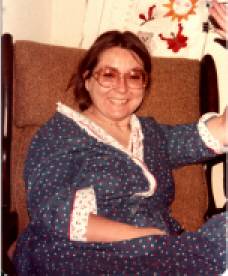
Christmas 1981 Around 1983 I first started to realize I was really sick. At first I noticed I'd stopped having my periods and, of course, I thought I was pregnant. I went to my Gynecologist who had no explanation. Then I got really tired. I would take my son to a half hour Choir rehearsal and could not stay awake for the whole time.

A whole raft of other symptoms started appearing - I grew a beard (Hirsuitism), gained weight even though I was on Weight Watchers and working out at the gym nearly every day, lost my period, everything hurt, got what is called a "moon face" and a "buffalo hump" on the back of my neck. I also got stretch marks. I was very depressed but it's hard to say if that was because of the hormone imbalance or because I felt so bad and no one would listen to me.

I came across a little article in the Ladies Home Journal which said "If you have these symptoms...ask your doctor about Cushing's". After that, I started reading everything I could on Cushing's and asking my doctors. Due to all my reading at the library, I was sure I had Cushing's but no one would believe me. Doctors would say that Cushing's Disease is too rare, that I was making this up and that I couldn't have it.

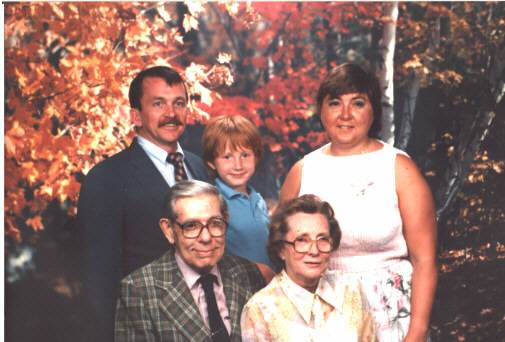
Gaining weight in 1986 My husband just told me to think "happy thoughts" and it would all go away. A Neurologist gave me Xanax. Since he couldn't see my tumor with his Magnetic Resonance Imaging (MRI) machine there was "no possibility" that it existed. Boy was he wrong!

In late 1986 I started bruising incredibly easily. I could touch my skin and get a bruise. On New Year's Day of 1987 I started bleeding under the skin. My husband made circles around the outside perimeter each hour with a marker. When I went to my Internist the next day he was shocked at the size. He now thought I had a blood disorder so he sent me to a Hematologist/Oncologist.
Fall 1986 I was also having trouble with my feet and walking, so I had the distinction of going to two doctors in one day, a Podiatrist in the morning and the Hematologist/Oncologist in the afternoon.

Fortunately, the Hematologist/Oncologist ran a twenty-four hour urine test and really looked at me. Both he and his partner recognized that I had Cushing's.

It was not yet determined if it was Cushing's Disease (Pituitary) or Syndrome (Adrenal). However, he couldn't help me any further so the Hematologist referred me to an Endocrinologist.

The Endocrinologist, of course, didn't trust the other tests I had had done so I was back to square one. He ran his own multitude of tests. He had to draw blood at certain times like 9 AM. and 5 PM. There was a dexamethasone suppression test where I took a pill at 10 p.m. and gave blood at 9 am the next day. I collected gallons of urine in BIG boxes (Fun in the fridge!). Those were from 6 a.m. to 6 a.m. to be delivered to his office by 9 a.m. same day. I was always worried that I'd be stopped in rush hour and the police would ask about what was in that big container. I think I did those for a week. He also did standard neurological tests and asked lots of questions.

March 1987 after a week of testing When he confirmed that I had Cushing's he sent me to a local hospital where they repeated all those same tests for another week and decided that it was not my adrenal gland (Cushing's Syndrome) creating the problem. The doctors and nurses had no idea what to do with me, so they put me on the brain cancer ward.

When I left this hospital after a week, we didn't know any more than we had before.

As luck would have it, NIH (National Institutes of Health, Bethesda, Maryland) was doing a clinical trial of Cushing's. I live in the same area as NIH so it was not too inconvenient but very scary at first to think of being tested there. At that time I only had a choice of NIH, Mayo Clinic and a place in Quebec to do this then-rare pituitary surgery called a Transsphenoidal Resection. I chose NIH - closest and free. After I was interviewed by the Doctors there, I got a letter that I had been accepted into the clinical trial. The first time I was there was for 6 weeks as an inpatient. More of the same tests.

There were about 12 of us there and it was nice not to be alone with this mystery disease. Many of these Cushies (mostly women) were getting bald, couldn't walk, having strokes, had diabetes. One was blind, one had a heart attack while I was there. Towards the end of my testing period, I was looking forward to the surgery just to get this whole mess over with. While I was at NIH, I was gaining about a pound a day!

The MRI still showed nothing, so they did a Petrosal Sinus Sampling Test. That scared me more than the prospect of surgery. (This test carries the risk of stroke and uncontrollable bleeding from the incision points.) Catheters were fed from my groin area to my pituitary gland and dye was injected. I could watch the whole procedure on monitors. I could not move during this test or for several hours afterwards to prevent uncontrolable bleeding from a major artery. The test did show where the tumor probably was located. Also done were more sophisticated dexamethasone suppression tests where drugs were administered by IV and blood was drawn every hour (they put a heplock in my arm so they don't have to keep sticking me). I got to go home for a weekend and then went back for the surgery - the Transsphenoidal Resection. I fully expected to die during surgery (and didn't care if I did) so I signed my will and wrote last letters to those I wanted to say goodbye to. During the time I was home just before surgery, a college classmate of mine (I didn't know her) did die at NIH of a Cushing's-related problem. I'm so glad I didn't find out until a couple months later!

November 3, 1987, the surgeon, Dr. Ed Oldfield, cut the gum above my front teeth under my upper lip so there is no scar. He used tiny tools and microscopes. My tumor was removed successfully. In some cases (not mine) the surgeon uses a plug of fat from the abdomen to help seal the cut. Afterwards, I was in intensive care overnight and went to a neurology ward for a few days until I could walk without being dizzy. I had some major headaches for a day or two but they gave me drugs (morphine) for those. Also, I had cotton plugs in my nostrils. It was a big day when they came out. I had diabetes insipidus (DI) for a little while, but that went away by itself - thank goodness!

I had to use a foam product called "Toothies" to brush my teeth without hitting the incision. Before they let me go home, I had to learn to give myself an injection in my thigh. They sent me home with a supply of injectible cortisone in case my level ever fell too low (it didn't). I was weaned gradually off cortisone pills (scary). I now take no medications. I had to get a Medic Alert bracelet. I will always need to tell medical staff when I have any kind of procedure - the effects of my excess cortisone will remain forever.

I went back to the NIH for several follow-up visits of a week each where they did all the blood and urine testing again. After a few years NIH set me free. Now I go to my "outside" endocrinologist every year for the dexamethasone suppression test, 24-hour urine and regular blood testing.

As I get further away from my surgery, I have less and less chance that my tumor will grow back. I have never lost all the weight I gained and I still have the hair on my chin but most of my other symptoms are gone. I am still and always tired and need a nap most days. I do not, however, still need to take whole days off just to sleep.

I consider myself very lucky that I was treated before I got as bad as some of the others on my floor at NIH but think it is crazy that these symptoms are not taken seriously by doctors.

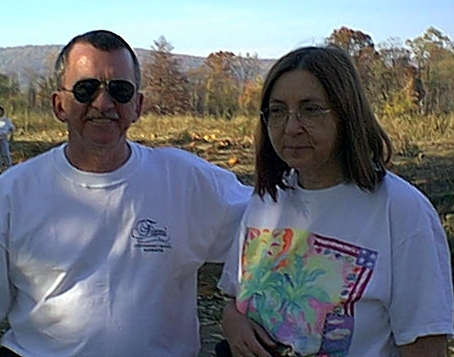
Tom and me in Barbados

Update: Fall, 1999:

I went for my regular testing with my private endocrinologist.

Besides the annual testing, he told me that my pituitary gland is shutting down, so I must always have extra cortisone (Cortef) for any medical stress such as surgery or the flu.

Many people are now finding that they need HgH after pituitary surgery, so an Insulin Tolerance Test was performed. My endocrinologist painted a very rosey picture of how wonderful I'd feel on Growth Hormone. It sounded like a miracle drug to me!

I was only asked to fast before the ITT and to bring someone with me to take me home. There is no way I could have driven home. I got very cold during the test and they let me have a blanket. Also, though, lying still on that table for so long, my back hurt later. I'd definitely take - or ask for - a pillow for my back next time. They gave me a rolled up blanket for under my knees, too.

I don't remember much about the test at all. I remember lying very still on the table. The phlebotomist took blood first, then tried to insert the IV (it took a few tries, of course). Then the endo himself put the insulin in through the IV and took the blood out of that. I remember the nurse kept asking me stupid questions - I'm sure to see how I was doing on the consciousness level. I'd imagine I sounded like a raving lunatic, although I believed that I was giving rational answers at the time.

Then everything just got black...I have no idea for how long, and the next thing I knew I was becoming aware of my surroundings again and the doctor was mumbling something. They gave me some juice and had me sit up very slowly, then sit on the edge of the table for a while. When I thought I could get up, they gave me some glucose tablets "for the road" and called my friend in. I was still kind of woozy, but they let her take me out, very wobbly, kind of drunk feeling.

My friend took me to a close-by restaurant - I was famished - but I still had trouble with walking and felt kind of dazed for a while. When I got home, I fell asleep on the sofa for the rest of the day.

But the most amazing thing happened. Saturday and Sunday I felt better than I had for 20 years. I had all this energy and I was flying high! It was so wonderful and I hoped that that was from the HgH they gave me to wake me up.

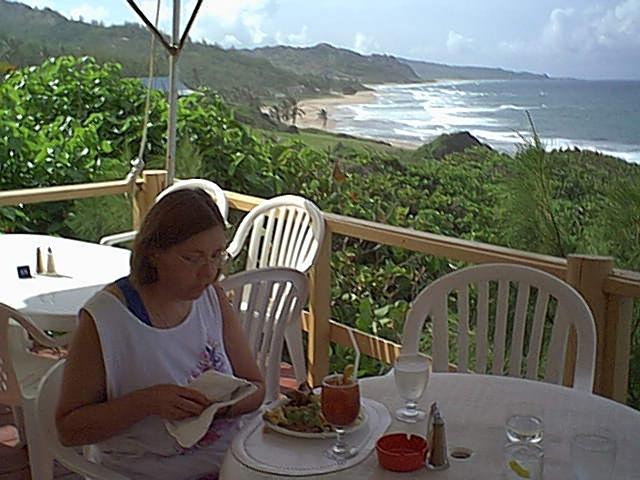
Edgewater Inn, Barbados

I will have to take this test annually until I do I do qualify for HgH. I got a small taste of what I would feel like on this drug - that weekend I felt much better than I can remember feeling in a very long time. Hopefully, at some point, I will "qualify" for this drug, even though it means a daily injection. I would really like to feel better sometime - less tired, less depressed, more human.

In July of 2000, I was talking with my dear friend Alice, who runs a wonderful menopause site, Power Surge, wondering why there weren't many support groups online (OR off!) for Cushing's and I wondered if I could start one myself and we decided that I could. This website (http://www.cushings-help.com) first went "live" July 21, 2000 and the message boards September 30, 2000. Hopefully, with this site, I'm going to make some helpful differences in someone else's life.

The message boards are very active and we have weekly online text chats, weekly live interviews, local meetings, email newsletters, a clothing exchange, a Cushing's Awareness Day Forum, podcasts, phone support and much more.

Whenever one of the members of the boards gets into NIH, I try to go to visit them there. Other board members participate in the "Cushie Helper" program where they support others with one-on-one support, doctor/hospital visits, transportation issues and more.

My husband, Tom (pictured above) posted this on the message boards:

"I just read your description of the 9 year ordeal. I am Mary's husband and much of your story was familiar.

Mary diagnosed her own illness. After a prolonged journey from doctor to doctor.

After her surgery and recovery, I found myself at a neurologist's office for some trivial ailment and the place seemed familiar.

Then it dawned on me that I had been there before with Mary. This was one of the doctors who had failed to listen. Or perhaps simply had no knowledge base about Cushing's.

In any event, I stopped the process I was there for and changed the subject to the previous visit 4 years ago. I told the doctor to look up his records on Mary O'Connor and study them. Told him that what he would see in his files was a case of Cushing's, misdiagnosed as something that might respond to Valium.

I said he could learn something and perhaps help the next person who arrived with Cushing's.

Out of fairness to the medics, the ailment is so rare that a doctor can go his entire career and never see a single case. And it is certainly possible that the doctor may fail to diagnose the few cases they may see.

Mary's surgery was done at NIH. It came down to them or the Mayo Clinic. At the time we did not realize that NIH was free and we selected them over Mayo based on their success and treatment record. They were happy to learn they had beat Mayo without a price advantage. We were happy to hear it was free.

During the same time Mary was at NIH, another woman had the same operation. She came from Mary's home town. They were class mates at college. They had the same major. They were the same age. They had the same surgical and medical team. Mary recovered. The other woman died during surgery.

I am an aggressive person who deals directly with problems. I enjoy conflict and I thrive in it.

This experience made clear how little we control. And how much depends on the grace of God.

This year we celebrated our 28th anniversary. Our son has grown into a fine young man and is succeeding admirably in college.


Life is the answer. We keep going on....undaunted and ever hopeful.

Tom O'Connor"

Update July 26, 2001

I saw the endo today. My pituitary function is continuing to drop, so August 6, I'll Be having another ITT, as described above. Hopefully, after this one, I'll be able to take Growth Hormone and start feeling better!

Update August 6, 2001

I had the ITT this morning. I don't get any results until a week from Thursday, but I do know that I didn't recover from the insulin injection as quickly as I did last time. The endo made a graph for my husband of me today and a "normal" person, although I can't imagine what normal person would do this awful test! A normal person's blood sugar would drop very quickly then rise again at about a right angle on the graph.

I dropped a little more slowly, then stayed very low for a long time, then slowly started to rise. On the graph, mine never recovered as much as the normal person, but I'm sure that I did, eventually.

The test this time wasn't as difficult as I remember it being, which is good. Last time around, I felt very sweaty, heart pounding. I don't remember any of that this time around. I do know that I "lost" about an hour, though. The phlebotomist took the first blood at 9:15, then the endo injected the insulin and took blood every 15 minutes after that. I counted (or remembered) only 4 of the blood draws, but it was 11:30 when they told me that my sugar wasn't coming up enough yet and I'd have to stay another 30 minutes. It actually ended up being another hour.

Kim, the phlebotomist, asked me if I got a headache when they "crashed me" and I have no recollection of any of that.

Like last time, I was very, very cold, even with the blanket and my left arm - where the heplock was - fell asleep. Other than that - and my back hurting from lying on one of those tables all that time this wasn't as bad as I remembered.

So, I waited for 10 days...

Update Fall, 2002.

The endo refused to discuss my fatigue or anything at all with me until I lost 10 pounds. He said I wasn't worth treating in my overweight condition and that I was setting myself up for a heart attack. He gave me 3 months to lose this weight. Those 3 months included Thanksgiving, Christmas and New Years.

I know that I would like to lose weight, but I'd like to do it on my own terms, not over Thanksgiving, Christmas and New Years, not because this endo was rude about it. I left his office in tears. I'm now looking for a new one...

Update Fall, 2004

I left my previous endo in November of 2002. He was just too rude, telling me that I was setting myself up for a heart attack and that I wasn't worth treating. I had left his office in tears.

Anyway, I tried for awhile to get my records. He wouldn't send them, even at doctors' or my requests. Finally, my husband went to his office and threatened him with a court order, The office manager managed to come up with about 13 pages of records. For going to him from 1986 to 2001, that doesn't seem like enough records to me.

I had emailed NIH and they said that they would be "happy" to treat me, but it was long between emails, and it looked like things were moving s-l-o-w-l-y. I had also contacted UVa, but they couldn't do anything without those records.

Last April, many of us from the message boards went to the UVa Pituitary Days Convention. By chance, we met a wonderful woman named Barbara Craven. She sat at our table for lunch on the last day and, after we learned that she was a dietitian who had had Cushing's, one of us jokingly asked her if she'd do a guest chat for us. I didn't follow through on this until she emailed me one day last summer. In the email, she asked how I was doing. Usually I say "fine" or "ok" but for some reason, I told her exactly how awful I was feeling.

Barbara emailed me back and said I should see a doctor at Johns Hopkins. And I said I didn't think I could get a recommendation to there, so SHE referred me. The doctor got right back to me, set up an appointment. Between his vacation and mine, that first appointment turned out to be Tuesday, Sept 14, 2004.

Just getting through the maze at Johns Hopkins was amazing. They have the whole system down to a science, moving from one place to another to sign in, then go here, then window 6, then... But it was very efficient.

My new doctor was wonderful. Understanding, knowledgeable. He never once said that I was "too fat" or "depressed" or that all this was my own fault. I feel so validated, finally.

He looked through my records, especially at my 2 previous Insulin Tolerance Tests. From those, he determined that my growth hormone has been low since at least August 2001 and I've been adrenal insufficient since at least Fall, 1999 - possibly as much as 10 years! I was amazed to hear all this, and astounded that my former endo not only didn't tell me any of this, he did nothing. He had known both of these things - they were in the past records that I took with me. Perhaps that was why he had been so reluctant to share copies of those records. He had given me Cortef in the fall of 1999 to take just in case I had "stress" and that was it.

The new endo took a lot of blood (no urine!) for cortisol and thyroid stuff. I'm going back on Sept. 28, 2004 for arginine, cortrosyn and IGF testing.

He has said that I will end up on daily cortisone - a "sprinkling" - and some form of GH, based on the testing the 28th.

So, in a couple weeks, I might start feeling better! Wowee!

For those who are interested, my new endo is Roberto Salvatori, M.D.
Assistant Professor of Medicine at Johns Hopkins

Medical School: Catholic University School of Medicine, Rome, Italy
Residency: Montefiore Medical Center
Fellowship: Cornell University, Johns Hopkins University
Board Certification: Endocrinology and Metabolism, Internal Medicine

Clinical Interests: Neuroendocrinology, pituitary disorders, adrenal disorders

Research Interests: Control of growth hormone secretion, genetic causes of growth hormone deficiency, consequences of growth hormone deficiency.

Update October, 2004

I had cortrosyn and arginine-GHRH stimulation test at Johns Hopkins. They confirmed what the doctor learned from reading my 4 year old records - that I'm both adrenal-deficient and growth hormone-deficient. I started on my "sprinkle" (5 mg twice a day) of Cortef now and my new doctor has started the paperwork for GH so maybe I'm on my way...

Yea!!!

It feels weird to be going back on the cortisone after being off for so many years but at this point, I think I'd sell my soul to the devil not to feel the way I've been feeling for the last several years.

Update November, 2004

Although I have this wonderful doctor, a specialist in growth hormone deficiency at Johns Hopkins, my insurance company saw fit to over-ride his opinions and his test results based on my past pharmaceutical history! Hello??? How could I have a history of taking GH when I've never taken it before?

Of course, I found out late on a Friday afternoon. By then it was too late to call my case worker at the drug company, so we'll see on Monday what to do about an appeal. My local insurance person is also working on an appeal, but the whole thing sounds like just another long ordeal of finding paperwork, calling people, FedExing stuff, too much work when I just wanted to start feeling better by Thanksgiving. I guess that's not going to happen, at least by the 2004 one.

As it turns out the insurance company rejected the brand of hGH that was prescribed for me. They gave me the ok for a growth hormone was just FDA-approved for adults on 11/4/04. The day this medication was approved for adults was the day after my insurance said that's what is preferred for me. In the past, this form of hGH was only approved for children with height issues. Am I going to be a ginuea pig again? The new GH company has assigned a rep for me, has submitted info to pharmacy, waiting for insurance approval, again.

Update December 7, 2004

I finally started the Growth Hormone last night - it's like a rebirth for me. I look forward to having my life back in a few months!

Update January 3, 2005

After a lot of phone calls and paperwork, the insurance company finally came through at the very last minute, just as I needed my second month's supply. Of course, the pharmacy wouldn't send it unless they were paid for the first month. They had verbal approval from the insurance, but the actual claim was denied. Talk about a cliff hanger!

Update January 25, 2005

I've been on the growth hormone for 7 weeks now, and see no change in my tiredness and fatigue. A couple weeks ago, I thought there was a bit of improvement. I even exercised a little again, but that was short lived.

I feel like my stomach is getting bigger, and Tom says my face is looking more Cushie again. Maybe from the cortisone I've been taking since October. I can't wait until my next endo appointment in March to increase my GH. I want to feel better already!

Update March 21, 2005

My endo appointment is over. My endo thinks that my weight gain is from the cortisone, as I'd suspected. He cut that amount in half to see if I would stop gaining weight and maybe lose a little. Because of the adrenal insufficiency, I can't completely stop it, thought. My IGF-1 was "normal" so I can't increase the GH.

I made a vacation of this trip, though. A friend and I stayed 2 nights in a hotel and had some fun. The hotel had an indoor pool, hot tub, sauna, exercise room, wireless internet access, free shuttles to Johns Hopkins and the Baltimore Inner Harbor. We had a good time for ourselves, so I came home from this endo trip more tired than ever. Over the weekend, I took 7-hour naps on both Saturday and Sunday. Hopefully, that will get better as my body adjusts to the loser dose of Cortef.

Update September, 2005.

My last endo appointment I had lost some weight but not enough. My energy levels are down again, so my endo increased the cortisone slightly. I hope I don't start gaining again. I don't see any benefit with the growth hormone.

Update January, 2006.

A new year, a new insurance battle. Once again, they don't want to pay so I have to go through the whole approval process again. This involves phone calls to Norditropin (the company that makes the GH), my endo, iCore Specialty Pharmacy (the people who prepare and ship the meds) and my insurance company. This is turning into a full-time job!

Update April 14, 2006

I just went to see my endo again on Thursday to see how things are. Although I know how they are - I'm still tired, gaining a little weight, getting some red spots (petechiae) on my midsection. He also noted that I have a "little" buffalo hump again.

My endo appointment is over. Turns out that the argenine test that was done 2 years ago was done incorrectly. The directions were written unclearly and the test run incorrectly, not just for me but for everyone who had this test done there for a couple years. My endo discovered this when he was writing up a research paper and went to the lab to check on something.

So, I'm off GH again for 2 weeks, then I'm supposed to be retested. The "good news" is that the argenine test is only 90 minutes now instead of 3 hours.

Update June 2, 2006

Wow, what a nightmare my argenine retest started! I went back for that Thursday, April 27, 2006. Although the test was shorter, I got back to my hotel and just slept and slept. I was so glad that I hadn't decided to go home after the test.

Friday I felt fine and drove back home, no problem. I picked up my husband for a biopsy and took him to an outpatient surgical center. While I was there waiting for the biopsy to be completed, I started noticing blood in my urine and major abdominal cramps. I left messages for several of my doctors on what I should do. I finally decided to see my PCP after I got my husband home.

When Tom was done with his testing, his doctor took one look at me and asked if I wanted an ambulance. I said no, that I thought I could make it to the emergency room ok - Tom couldn't drive because of the anaesthetic they had given him. I barely made it to the ER and left the car with Tom to park. Tom's doctor followed us to the ER and became my new doctor.

They took me in pretty fast since I was in so much pain, and had the blood in my urine. They thought it was a kidney stone. After a CT scan, my new doctor said that, yes, I had a kidney stone but it wasn't the worst of my problems, that I had kidney cancer. Wow, what a surprise that was! I was admitted to that hospital, had more CT scans, MRIs, bone scans, they looked everywhere.

My open radical nephrectomy was May 9, 2006 in another hospital from the one where the initial diagnosis was made. My surgeon felt that he needed a specialist from that hospital because he believed preop that my tumor had invaded into the vena cava because of its appearance on the various scans. Luckily, that was not the case.

My entire left kidney and the encapsulated cancer (10 pounds worth!) were removed, along with my left adrenal gland and some lymph nodes. Although the cancer (renal cell carcinoma AKA RCC) was very close to hemorrhaging, the surgeon believes he got it all. He said I was so lucky. If the surgery had been delayed any longer, the outcome would have been much different. I will be repeating the CT scans every 3 months, just to be sure that there is no cancer hiding anywhere. As it turns out, I can never say I'm cured, just NED (no evidence of disease). This thing can recur at any time, anywhere in my body.

I credit the argenine re-test with somehow aggravating my kidneys and revealing this cancer. Before the test, I had no clue that there was any problem. The argenine test showed that my IGF is still low but due to the kidney cancer I cannot take my growth hormone for another 5 years - so the test was useless anyway, except to hasten this newest diagnosis.

Update August 19, 2006

I've been even more tired than usual now that I'm off GH. I can't take my arthritis meds, or anything like Excedrin (no NSAIDs) so my joints are nearly always bothering me and I have to wait out any headaches. I'm also just getting over a UTI.

I just had my 3 month post-op CT scans and I hope they come out ok. At first I was grateful that I wouldn't have to have chemo or radiation come to find out that neither has been discovered yet which works well with kidney cancer. Apparently, it can resurface any time for the rest of my life. I'm hoping that some of the chemo clinical trials show some good results so I can get this thing before it metastasizes somewhere.

I'm having trouble sleeping (1:20 AM here, now) although I'm always tired.

Whine, whine!

On the plus side - I survived the kidney cancer surgery, and it's almost vacation time!

Even vacation will be bittersweet, though. 2 years ago, Sue went with us on vacation. She had a great time and she had asked if she could go with us again this year. Of course, we had said yes...

Update October 26, 2006

I went to see my Johns Hopkins endo again last week. He doesn't "think" that my cancer was caused by the growth hormone although it may well have encouraged the tumor to grow faster than it would have.

He was happy to see that I had lost 22 pounds since my last 6 month visit. Not all of that was from surgery! He reminded me that I can take more cortisone, but I hate to do that because I gain weight so fast when I take more.

He thought that my blood pressure was low - for me, not for "normal" people. He took my pressure several times, lying down, getting up quickly. But I never got dizzy. Maybe my pressure increase was temporary when the cancer started. All these mysteries I have that no one can answer.

My energy levels are lower than when I was on GH, and they're lower again because I had the adrenal removed, because of my panhypopit, because of my cancer even though currently NED, it can come back at any time, because of my GH deficiency...

Every day is a challenge getting up, doing something useful, doing something without arthritic pain and weakness, having the energy to finish even something "easy". I'm starting to get very depressed over all this. If this is the way the rest of my life is going to be, why bother?

People mostly assume that everything is OK with me because I am not getting chemo or radiation and because I look so "healthy" (thanks to the Cushing's/daily Cortef!). They figure that if there was any real danger of the cancer metasticizing that I would be on chemo, like other cancer patients do. They don't understand that I have to wait and pray because there are no approved ajuvant treatments. If/when my cancer returns, it's just more surgery. If I'm "lucky" enough and get to a stage 4 THEN I can have chemo/radiation as a pallative measure.

Update December 2006

According to my PCP my blood pressure is truly low. But can I go off these bp meds? Nope...because I have only one kidney, these would have been prescribed anyway as a support for my kidney. Can't win!

I am maintaining my weight loss but none of my clothes are loose, I can't fit in anything smaller. Belly is still there. So the weight loss is just a numbers game.

Update March 2007

I posted this on the message boards in late February but many missed it and are still asking...

Walking Wounded, the sequel!

Wow! I guess I haven't been on the boards for 2 weeks or so. I see that I have dozens of PMs to read, many emails to check/answer and I missed at least one person who had ordered an Awareness Bracelet that I never sent.

My Monday appointment with the surgeon went ok. He took blood/urine and was going to send me for CT scans. That day, as I recall was very cold here with a wind chill of something like -7o

I came home and taught my piano students, as usual.

Tuesday morning I woke up and my back hurt. I assumed it was from the cold combined with my arthritis. That got worse throughout the day so I called my PCP. Naturally, he was away until the 19th but had a substitute I could see Wed. I didn't want to wait because the pain was excruciating by now and I couldn't get out of chairs or sofa without using the walker I had from surgery to help pull me up.

So I called my husband at work and he said he'd come home and take me to the ER. I had been supposed to have handbell rehearsal that night so I called my director and let her know I wouldn't make it. She assumed that Tom (husband) would be home sooner than he was, so she got the associate pastor from my church and they headed to the ER to wait with us.

They asked about me at the front desk and were assured that I was there although they didn't see me. I guess they thought I was with the triage nurse or something. So they waited. Then a Melissa O'Connor was called... My people realized it wasn't me and left.

Finally, Tom got home - he had really important work to do (sarcastically said!) and I got to the ER about 6:00PM. Last time I was there, they told me I had kidney cancer, so I was hoping that there was no rerun of that experience!

The triage nurse let me wait on a gurney instead of one of the hard plastic chairs in the waiting room.

Unfortunately, they also wanted blood and urine. My only good arm had been used by the neurosurgeon the day before. Luckily the nurse finally got the IV in to my other arm. I guess my veins are a bit better post-Cushing's. No collapses this time.

They did CT scans (so I don't have to do my surgeon's ones - YEA!) and XRays and found basically nothing except lung nodules that hadn't grown much since my last scan - say what? I didn't know I HAD lung nodules.

I got some percocet and they sent me home with orders to see the sub PCP in 2 days. The percocet didn't do much except make me sleepy/groggy. My days were spent watching TV and sleeping. Even sitting at the computer or the table was too painful.

Tom took me to the sub PCP on that Friday and she's sending me to physical therapy.

Until yesterday, I didn't drive at all, and the weather has been awful, so I haven't even called about the PT yet.

There is still a little pain, and I need the walker to get out of bed, but I'm doing much better.

A weird side thing - Tom was driving my car since it's a van and much heavier than his midlife crisis sports car. The van does much better with snow and ice that we had the last couple weeks.

One day he got it home, slammed the door - and the window slid down into the door. Somehow it got off the tracks. Luckily the glass didn't break. So that was a bit of a problem and $$. No one had ever even heard of this problem before.

Anyway, I hope to get to your PMs, emails and whatever ASAP!

It feels a bit weird being here - like my baby has grown up, left home and doesn't need me anymore. Can you have Empty Nest Syndrome for message boards? LOL

I have started a new Blog called Cushing’s, Cancer & Music and I plan to keep that updated a little more often than this bio. Rather than the actual events that have taken place, I am letting some of my pent-up feelings out. NOTE: This blog was destroyed by hackers in June 2008 :( I don't know when or if I will ever have the energy to rebuild it.

Alaskan Cruise, 2007On an Alaskan cruise, June 2007. More about the cruise.


As of the Columbus meeting July 21, 2007 I have met 70 members of the message boards (listed as Friends) in addition to Cushies who are NOT on the boards! I have travelled to meet Cushies at NIH in Bethesda, MD, Ohio, Pennsylvania, Oklahoma, Michigan, Wisconsin, Illinois, New York, Florida, Tennessee, Connecticut, UVa in Southern Virginia and Oregon.

I was so stupid way back in 1987 when I thought that all my troubles would be over when my pituitary surgery was over.

And so I wait...


Cushings-Help.com, and quotes from MaryO was included in the Cover Story of this issue of Forbes Magazine, Best of the Web Issue. The title: "Use With Care" by Matthew Schifrin and Howard Wolinsky.

Hopefully, this kind of mainstream exposure will help increase awareness for this often misunderstood disease. Read the article here.


MaryOVOICE Chat
Listen live to an archived interview from Thursday, January 3, 2008 with MaryO. Achived audio is available through the Podcast page of this site, BlogTalkRadio, the CushingsHelp Podcast or through iTunes Podcasts

Jayne and Robin also hosted a Special Cushing's Awareness Day live chat April 8, 2008. This chat included a lot of comments about MaryO. Archives are available.

Listen to CushingsHelp on internet talk radio